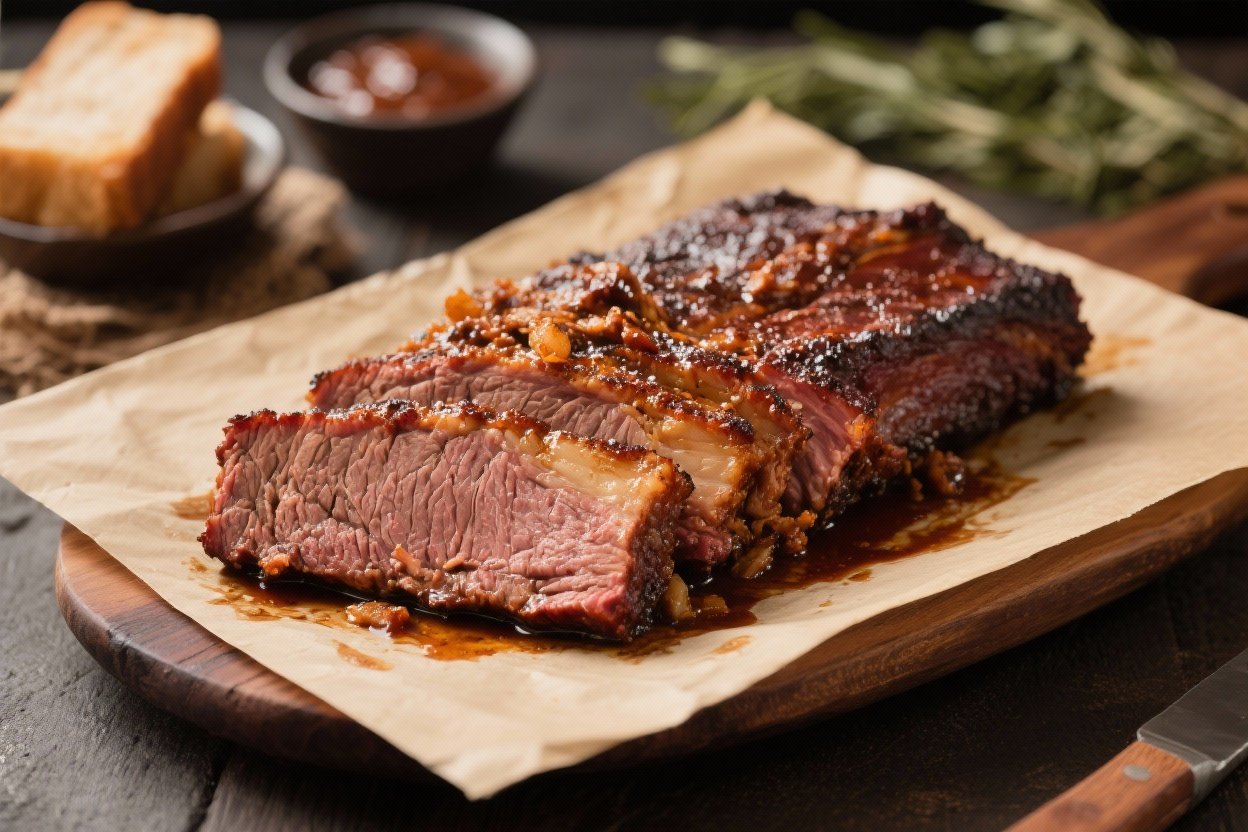
Trim the brisket. Chill the brisket slightly for easier trimming. Remove hard, waxy fat and thin the top fat cap to about 1/4 inch.
Square off thin edges to prevent burning.
Mix the rub. Stir salt and pepper (and garlic powder if using). Keep it simple—this is classic Texas style.
Apply binder and season. Lightly coat the brisket with mustard or tallow. Season generously and evenly on all sides, pressing the rub so it adheres.
Preheat the smoker to 225–250°F. Use post oak for clean, blue smoke.
Add a water pan if your smoker runs dry.
Place the brisket fat cap up or down based on heat source. If heat comes from below, fat cap down helps shield the meat. Position the point toward the hotter area.
Smoke until bark sets. Cook at 225–250°F for 6–8 hours, spritzing with water every 60–90 minutes once the bark starts forming. Don’t spritz too early or you’ll wash off the rub.
Check for the stall. Around 150–170°F internal, the brisket may stall.
When the bark is dark and firm and doesn’t rub off, wrap tightly in butcher paper for a better bark, or foil for speed and moisture.
Continue cooking to 200–205°F internal. More important than temperature is probe tenderness. A thermometer should slide in with little resistance, like warm butter, especially in the flat.
Rest properly. Vent the wrapped brisket for 5 minutes to stop carryover cooking, then place it in a cooler or warm oven (150–170°F) for at least 1–2 hours. Resting relaxes the meat and redistributes juices.
Slice and serve. Separate the point from the flat.
Slice the flat against the grain into pencil-thick slices. Turn the point and slice or cube for burnt ends. Serve with pickles, onions, and white bread if you want it truly Texas.