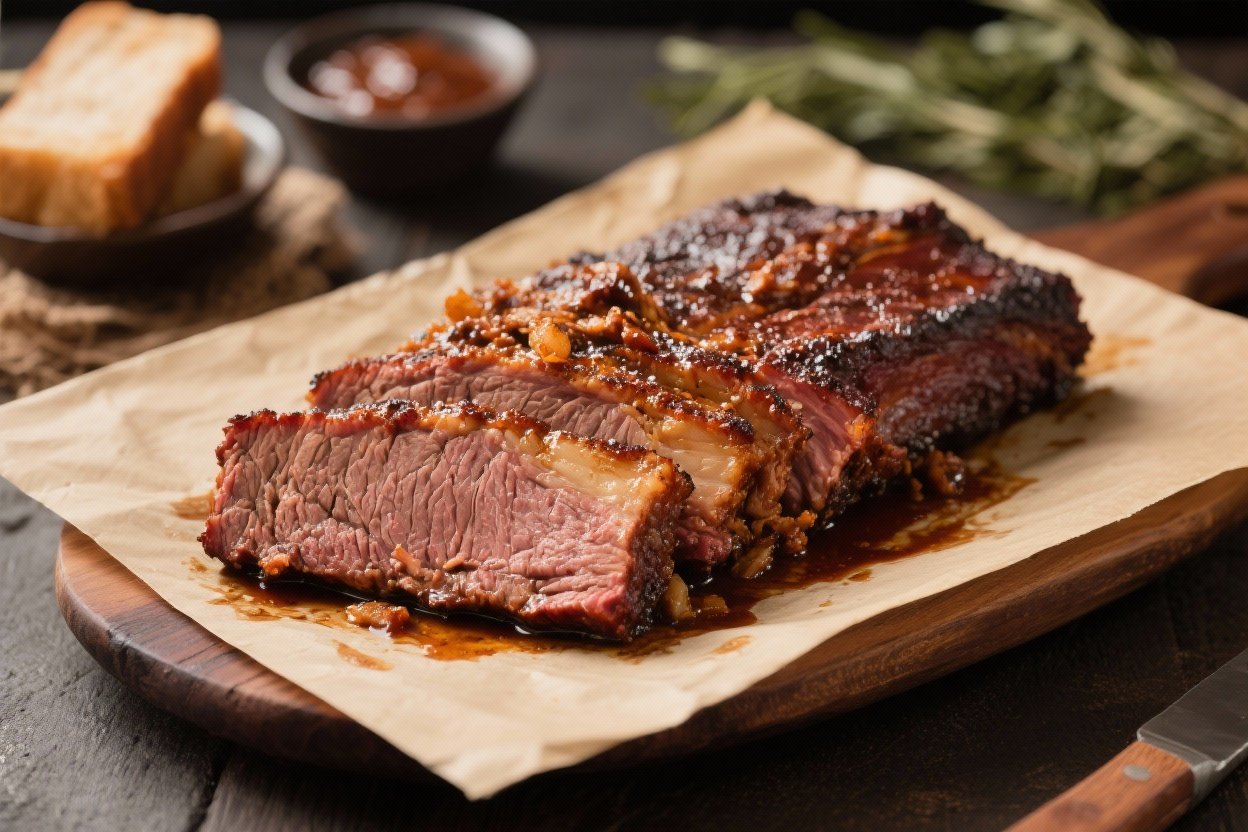
Texas-Style Smoked Beef Brisket – Simple, Authentic, and Bold
Texas brisket is all about patience and pure beef flavor. No fancy rubs or sugary sauces—just salt, pepper, smoke, and time. If you’ve ever tasted that tender slice with a rosy smoke ring and a bark that cracks under your knife, you know what the fuss is about.
This guide walks you through the essentials so you can get that backyard, low-and-slow magic at home. Whether it’s your first brisket or your tenth, these steps keep it approachable and repeatable.
Texas-Style Smoked Beef Brisket - Simple, Authentic, and Bold
Ingredients
- 1 whole packer brisket (12–15 lbs), with point and flat attached
- 1/4 cup kosher salt
- 1/4 cup coarse black pepper (16-mesh if available)
- Optional: 1 tablespoon garlic powder
- Yellow mustard or beef tallow (thin layer for binder, optional)
- Post oak wood (preferred), or a mix of oak, hickory, and a little fruit wood
- Water for the smoker water pan (if your smoker uses one)
- Butcher paper or heavy-duty foil for wrapping
Instructions
- Trim the brisket. Chill the brisket slightly for easier trimming. Remove hard, waxy fat and thin the top fat cap to about 1/4 inch.Square off thin edges to prevent burning.
- Mix the rub. Stir salt and pepper (and garlic powder if using). Keep it simple—this is classic Texas style.
- Apply binder and season. Lightly coat the brisket with mustard or tallow. Season generously and evenly on all sides, pressing the rub so it adheres.
- Preheat the smoker to 225–250°F. Use post oak for clean, blue smoke.Add a water pan if your smoker runs dry.
- Place the brisket fat cap up or down based on heat source. If heat comes from below, fat cap down helps shield the meat. Position the point toward the hotter area.
- Smoke until bark sets. Cook at 225–250°F for 6–8 hours, spritzing with water every 60–90 minutes once the bark starts forming. Don’t spritz too early or you’ll wash off the rub.
- Check for the stall. Around 150–170°F internal, the brisket may stall.When the bark is dark and firm and doesn’t rub off, wrap tightly in butcher paper for a better bark, or foil for speed and moisture.
- Continue cooking to 200–205°F internal. More important than temperature is probe tenderness. A thermometer should slide in with little resistance, like warm butter, especially in the flat.
- Rest properly. Vent the wrapped brisket for 5 minutes to stop carryover cooking, then place it in a cooler or warm oven (150–170°F) for at least 1–2 hours. Resting relaxes the meat and redistributes juices.
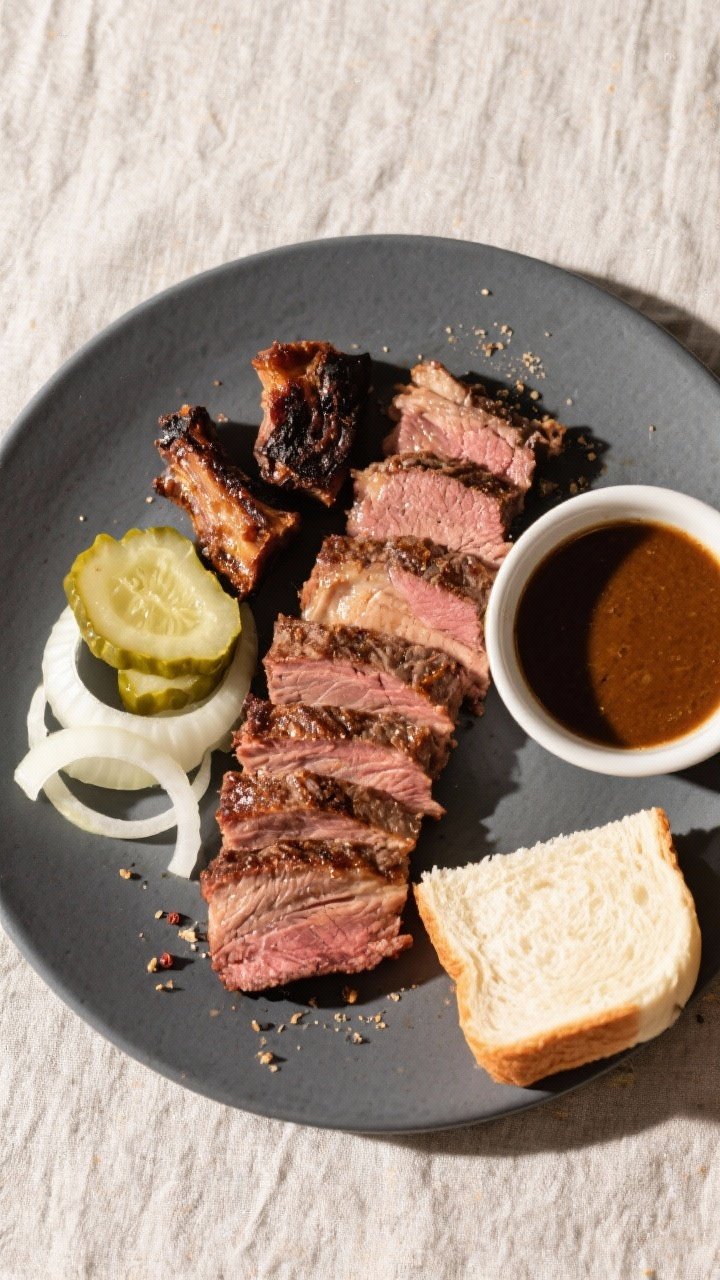
- Slice and serve. Separate the point from the flat.Slice the flat against the grain into pencil-thick slices. Turn the point and slice or cube for burnt ends. Serve with pickles, onions, and white bread if you want it truly Texas.
What Makes This Special
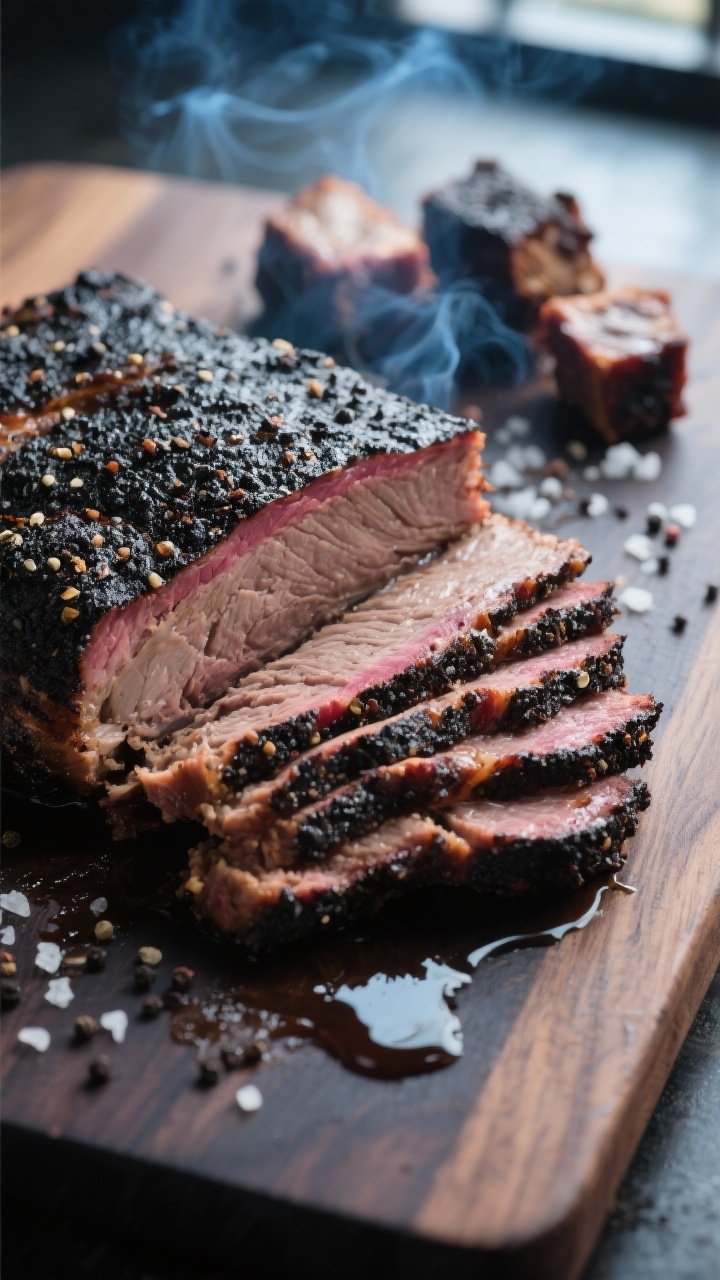
Texas-style brisket keeps things simple. The rub is just salt and pepper, so the smoke and beef take center stage.
The secret is in the low and slow cook, aiming for steady heat and clean smoke. Done right, you get a peppery bark, a juicy interior, and slices that bend without breaking.
Ingredients
- 1 whole packer brisket (12–15 lbs), with point and flat attached
- 1/4 cup kosher salt
- 1/4 cup coarse black pepper (16-mesh if available)
- Optional: 1 tablespoon garlic powder
- Yellow mustard or beef tallow (thin layer for binder, optional)
- Post oak wood (preferred), or a mix of oak, hickory, and a little fruit wood
- Water for the smoker water pan (if your smoker uses one)
- Butcher paper or heavy-duty foil for wrapping
Step-by-Step Instructions
- Trim the brisket. Chill the brisket slightly for easier trimming. Remove hard, waxy fat and thin the top fat cap to about 1/4 inch.
Square off thin edges to prevent burning.
- Mix the rub. Stir salt and pepper (and garlic powder if using). Keep it simple—this is classic Texas style.
- Apply binder and season. Lightly coat the brisket with mustard or tallow. Season generously and evenly on all sides, pressing the rub so it adheres.
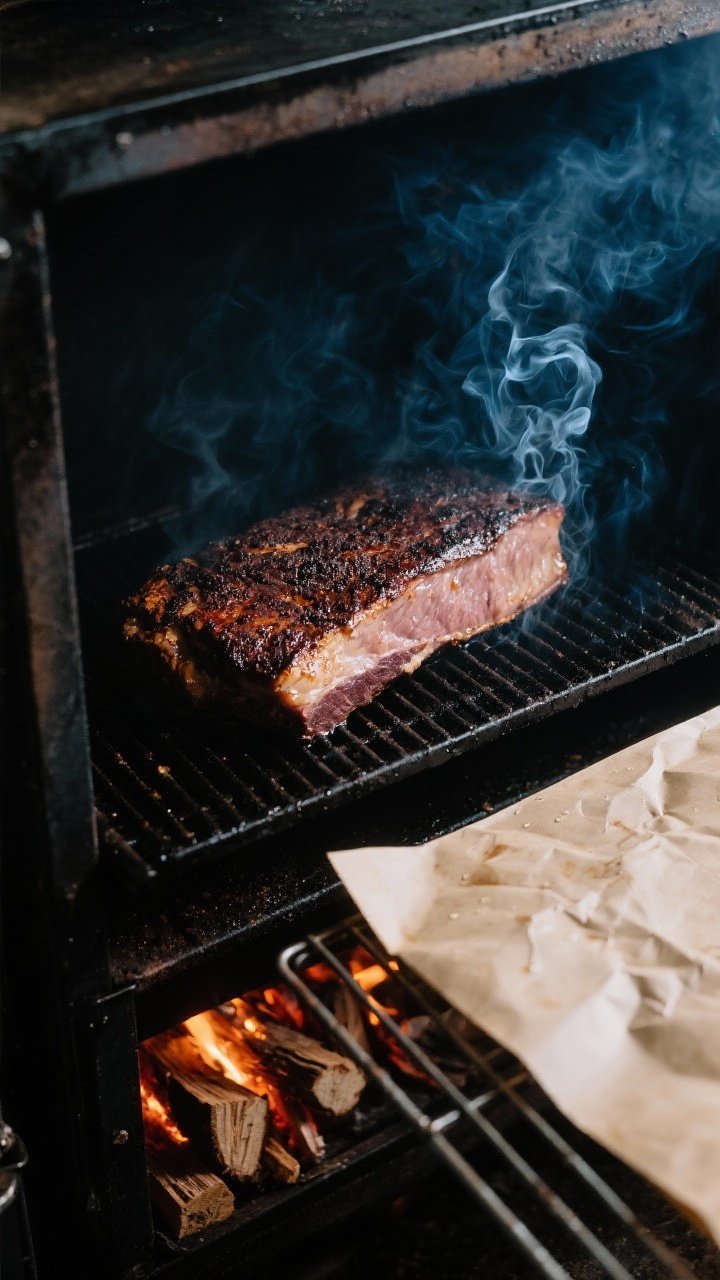
- Preheat the smoker to 225–250°F. Use post oak for clean, blue smoke.
Add a water pan if your smoker runs dry.
- Place the brisket fat cap up or down based on heat source. If heat comes from below, fat cap down helps shield the meat. Position the point toward the hotter area.
- Smoke until bark sets. Cook at 225–250°F for 6–8 hours, spritzing with water every 60–90 minutes once the bark starts forming. Don’t spritz too early or you’ll wash off the rub.
- Check for the stall. Around 150–170°F internal, the brisket may stall.
When the bark is dark and firm and doesn’t rub off, wrap tightly in butcher paper for a better bark, or foil for speed and moisture.
- Continue cooking to 200–205°F internal. More important than temperature is probe tenderness. A thermometer should slide in with little resistance, like warm butter, especially in the flat.
- Rest properly. Vent the wrapped brisket for 5 minutes to stop carryover cooking, then place it in a cooler or warm oven (150–170°F) for at least 1–2 hours. Resting relaxes the meat and redistributes juices.
- Slice and serve. Separate the point from the flat.
Slice the flat against the grain into pencil-thick slices. Turn the point and slice or cube for burnt ends. Serve with pickles, onions, and white bread if you want it truly Texas.
How to Store
- Refrigerate: Cool, then store sliced brisket in its juices in airtight containers for up to 4 days.
- Freeze: Vacuum-seal or tightly wrap portions with a little jus; freeze up to 3 months.
- Reheat: Warm gently in a 250°F oven, covered, with a splash of broth or drippings until hot.
Avoid microwaving without moisture.
Benefits of This Recipe
- Foolproof flavor: Salt, pepper, and oak let the beef shine.
- Big-batch friendly: Feeds a crowd and stores well.
- Flexible equipment: Works on offset smokers, kettles, pellets, or kamados.
- Classic technique: Teaches fundamentals you can apply to other cuts.
Pitfalls to Watch Out For
- Rushing the cook: High heat can toughen the flat and ruin the bark.
- Wrapping too early: If the bark isn’t set, it will go soft and muddy.
- Skipping the rest: Cutting too soon drains the juices and dries the meat.
- Dirty smoke: Thick white smoke tastes bitter. Aim for thin, blue smoke.
- Uneven slicing: Not cutting against the grain leads to chewy slices.
Alternatives
- Seasoning twist: Add 1 teaspoon each of onion powder and paprika for a subtle boost while staying close to Texas style.
- Wood options: If you can’t find post oak, use oak with a touch of cherry for color.
- No smoker? Use a charcoal grill with a two-zone fire and wood chunks, keeping temps steady at 250°F.
- Time-saver: Cook at 275°F to shorten the timeline; watch the bark and wrap when ready.
FAQ
How long does a 12–15 lb brisket take?
Plan on 10–14 hours total, plus a 1–2 hour rest. Every brisket cooks differently, so trust tenderness over time.
Should I inject the brisket?
Not necessary for Texas style.
If your brisket is select grade or very lean, a simple beef broth injection can help, but keep flavors minimal.
What’s the best internal temp to pull it?
Start probing at 198°F. Most briskets finish between 200–205°F, but the key is when the probe slides in easily across the flat.
Butcher paper or foil?
Butcher paper preserves bark and breathes. Foil is faster and juicier, but can soften the crust.
Choose based on your preference.
How do I keep the flat from drying out?
Trim properly, avoid overcooking, wrap when the bark sets, and rest well. Slicing against the grain also helps tenderness.
Wrapping Up
Texas-style smoked brisket is simple, but it rewards patience and attention. Keep your seasoning basic, your smoke clean, and your temps steady.
If you nail the bark, tenderness, and rest, you’ll have slices that make people go quiet at the table. That’s the mark of a great brisket—and you can absolutely make it at home.